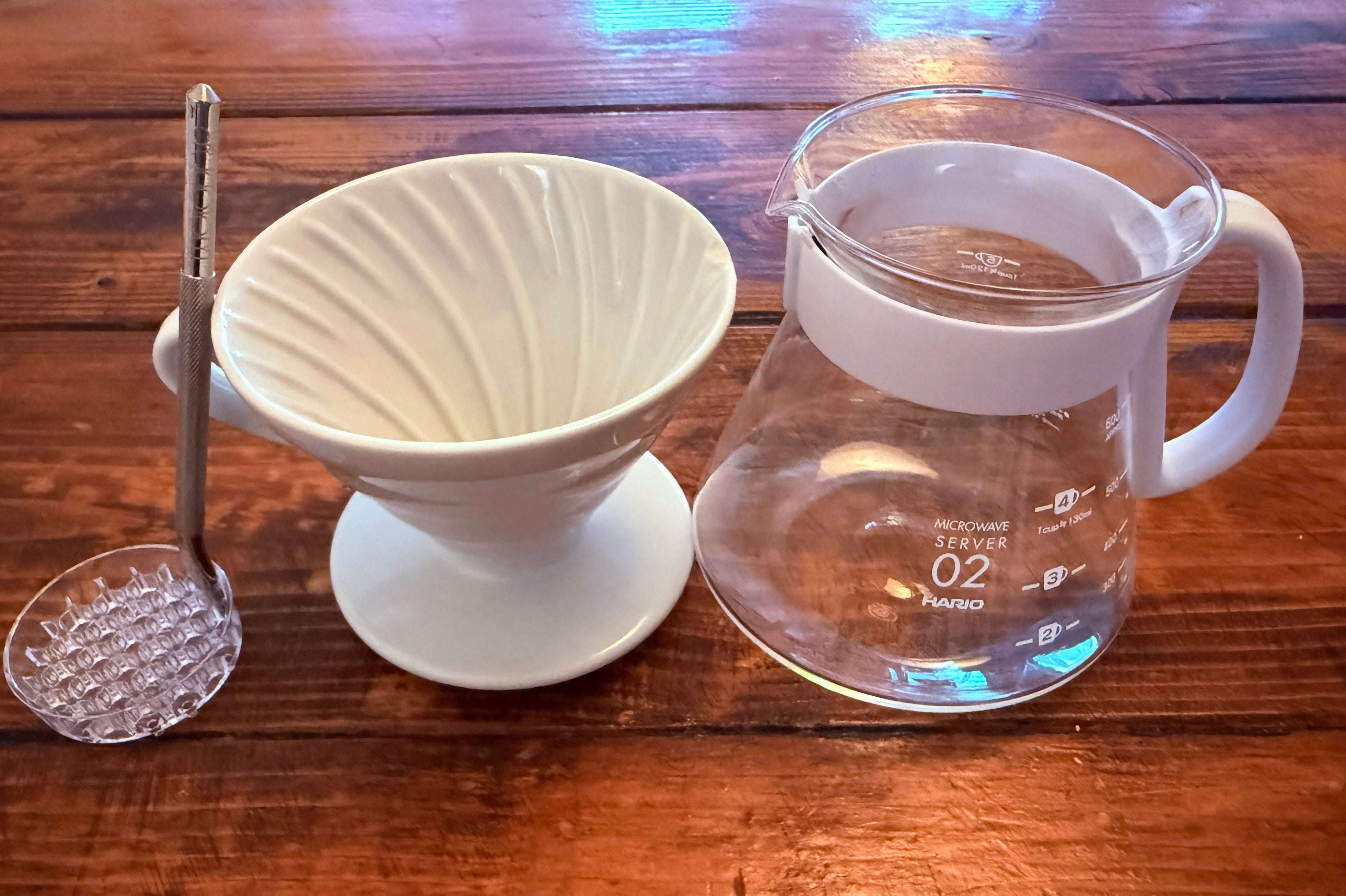
Article: Coffee Guide: Neapolitan Espresso, French Roasting and Specialty Coffee. How to choose
Coffee Guide: Neapolitan Espresso, French Roasting and Specialty Coffee. How to choose
Coffee is not one thing.
There are different traditions, roasting philosophies, brewing methods, origins, processing techniques, and flavor profiles—and understanding those differences can make choosing your next coffee much easier.
At Torrefare, we believe coffee is best explored rather than reduced to a single definition of what “good coffee” should be.
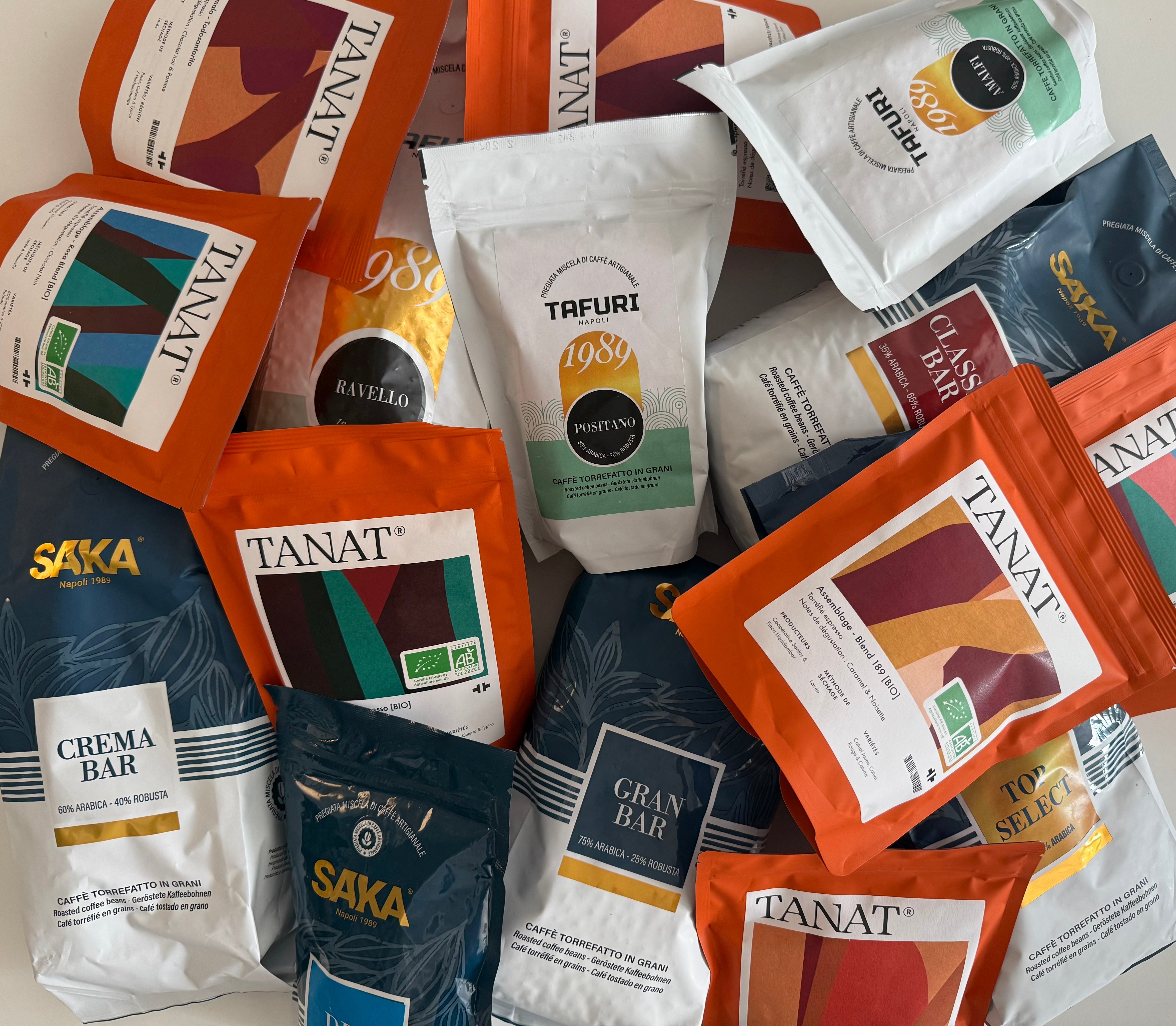
Our selection brings together different approaches to coffee, from traditional Neapolitan espresso blends from Saka Caffé in Naples to carefully roasted coffees from international roasters such as Tanat in Paris.
This guide explains the differences between traditional Italian espresso and modern specialty coffee, how Arabica and Robusta affect flavor, how roast level changes the cup, and how to choose the right coffee for your espresso machine, moka pot, or other brewing method.
What Is Italian Coffee?
“Italian coffee” is not a single type of coffee.
Italy has developed a distinctive coffee culture centered around espresso, but Italian coffee can encompass many different roasting styles, blends, regions, and traditions.
Traditional Italian espresso is often built around balance, body, aroma, crema, sweetness, and a satisfying finish.
Many classic Italian espresso blends combine Arabica and Robusta coffees. The proportion of each can dramatically change the character of the finished espresso.
Some Italian coffees are designed to produce a powerful, full-bodied espresso with abundant crema.
Others emphasize sweetness, aromatic complexity, or a softer balance.
The important thing to remember is that Italian coffee is a broad tradition—not a single roast level or flavor profile.
At Torrefare, we are particularly interested in this diversity.
We want to make it possible to explore traditional coffee while also discovering coffees that approach roasting, origin, and flavor from a different perspective.
What Is Neapolitan Coffee?
Neapolitan coffee refers to the coffee traditions associated with Naples and the surrounding Campania region of Italy.
Naples has one of the world’s most distinctive espresso cultures. Coffee is deeply embedded in everyday life, and traditional Neapolitan espresso is often associated with rich body, intense aroma, low perceived acidity, substantial texture, and a long finish.
Many traditional Neapolitan blends use both Arabica and Robusta.
The exact proportions vary from roaster to roaster.
Some blends emphasize Arabica for greater aromatic complexity and sweetness. Others use a higher percentage of Robusta to increase body, intensity, crema, and persistence.
Neapolitan coffee is therefore not defined by one particular recipe.
It is better understood as a tradition of roasting and preparing coffee that places considerable importance on the character of the finished espresso.
What Makes Neapolitan Espresso Different?
Traditional Neapolitan espresso often emphasizes characteristics such as:
- Full body
- Rich texture
- Low to moderate acidity
- Strong aroma
- Crema
- Chocolate, nut, spice, or caramel-like flavors
- A persistent finish
- The ability to stand up to milk
This can make traditional Neapolitan espresso very different from lighter specialty coffees.
A modern specialty coffee may emphasize acidity, clarity, floral aromas, fruit characteristics, and the unique qualities of a particular farm or region.
Traditional espresso often asks a different question:
How can we create a balanced, concentrated, satisfying cup of espresso?
Neither approach is automatically better.
They are different ways of appreciating coffee.
Saka Caffé: Traditional Neapolitan Coffee
Saka Caffé is a roaster from Naples with a family history in coffee roasting.
Its coffees represent the traditional side of the Torrefare selection.
Saka focuses heavily on espresso blends, including coffees that combine different proportions of Arabica and Robusta.
This makes Saka particularly interesting for people who want to experience traditional Neapolitan espresso at home.
Depending on the blend, you can find characteristics such as:
- Rich body
- Low acidity
- Chocolate
- Nuts
- Spice
- Dried fruit
- Creamy texture
- Pronounced crema
Saka coffees are particularly well suited to espresso machines, moka pots, and milk-based drinks.
Saka Caffé Crema Bar
Crema Bar combines 60% Arabica and 40% Robusta.
The result is a coffee with substantial texture and a balance between intensity and delicacy.
Its stated flavor characteristics include dark chocolate and raisins, with low acidity.
For someone trying traditional Neapolitan coffee for the first time, a blend such as Crema Bar can be a useful starting point because it combines Arabica complexity with the body and intensity contributed by Robusta.
Saka Caffé Gran Bar
Gran Bar contains 75% Arabica and 25% Robusta.
The blend combines five varieties of Arabica with two varieties of Robusta.
In espresso, it is characterized by creamy texture, low acidity, and hints of spice.
It is a good example of how increasing the Arabica proportion can create a different balance while maintaining the traditional Italian espresso character.
Saka Caffé Classic Bar
Classic Bar contains 35% Arabica and 65% Robusta.
The higher Robusta proportion produces a particularly full-bodied style of espresso with substantial texture and crema.
Its flavor profile includes dark chocolate and toasted hazelnut, with low acidity.
For drinkers who enjoy bold, powerful espresso, this type of blend can be very appealing.
What Is Specialty Coffee?
Specialty coffee is a broad term used for coffees that place greater emphasis on quality, traceability, sourcing, processing, and the characteristics of the coffee itself.
Specialty coffee can be evaluated according to factors such as:
- Coffee variety
- Country and region of origin
- Farm or producer
- Elevation
- Processing method
- Harvest
- Roasting
- Brewing
- Flavor characteristics
A specialty coffee may allow you to taste characteristics associated with a particular farm, variety, processing method, or growing region.
This can make specialty coffee feel very different from a traditional espresso blend.
Instead of blending coffees from multiple origins to create a consistent flavor profile, a roaster may choose to showcase a single coffee and preserve its distinctive characteristics.
Traditional Espresso vs. Specialty Coffee
There is no need to choose one philosophy forever.
Traditional espresso and specialty coffee can provide completely different experiences.
Traditional espresso often emphasizes:
- Body
- Crema
- Balance
- Consistency
- Chocolate and nut characteristics
- Bitterness balanced by sweetness
- Performance in espresso and milk drinks
Specialty coffee often emphasizes:
- Origin
- Variety
- Processing
- Acidity
- Fruit and floral characteristics
- Clarity
- Distinctive flavor
At Torrefare, we enjoy both.
That is one of the reasons our coffee selection is intentionally varied.
A coffee drinker might want a traditional Neapolitan espresso in the morning and a single-origin coffee with completely different characteristics later in the day.
There is no contradiction in enjoying both.
Tanat Coffee: A Different Approach to Roasting
Tanat represents a different side of the Torrefare selection.
Based in Paris, France, Tanat focuses heavily on roasting and on bringing out the characteristics of a coffee’s origin and variety.
Tanat describes its approach as artisanal and meticulously controlled roasting, with an emphasis on consistency and highlighting the work of coffee producers.
This makes Tanat a useful contrast to traditional Neapolitan blends.
Where a classic Saka blend may combine Arabica and Robusta from different coffees to create a particular espresso profile, Tanat’s coffees can place greater emphasis on the characteristics of a specific coffee, its origin, variety, processing, and roast.
That difference is exactly what makes exploring coffee interesting.
What Kind of Coffee Does Tanat Offer?
The Tanat selection includes several different coffees and blends.
Depending on the coffee, you can find characteristics associated with different origins, varieties, processing methods, roast levels, and brewing styles.
The current selection includes:
- Kawa Blend
- Tanat Espresso Blend
- Tanat Rosa Blend
- Tanat El Vapor
- Tanat Todosantarita
- Tanat Decaf
Tanat’s coffees are not all designed to taste the same.
Instead, they provide different ways to explore the effect of origin, processing, variety, and roasting.
Tanat El Vapor: An Example of Origin-Focused Coffee
Tanat El Vapor is a particularly good example of this approach.
The coffee comes from the El Vapor plot in Costa Rica’s Tarrazú region, at an altitude of approximately 1,900–2,100 meters.
It uses the Catuai variety and a White Honey processing method.
The coffee is produced by Roger Ureña Hidalgo and is roasted for espresso.
Its listed tasting notes are:
- Raisins
- Chocolate
- Praline
The coffee is described as having medium acidity and silky body.
This is very different from simply describing a coffee as “Italian espresso” or “dark roast.”
Here, the coffee’s identity includes its farm, producer, variety, altitude, processing method, roast approach, and tasting characteristics.
That information gives you a much better idea of what you are actually drinking.
Why Does Coffee Origin Matter?
Coffee is affected by where and how it is grown.
Climate, altitude, soil, variety, agricultural practices, harvesting, and processing can all influence the characteristics of the finished coffee.
That does not mean one country automatically produces better coffee than another.
It means different origins can produce different sensory experiences.
For example, a coffee from Costa Rica can have very different characteristics from a coffee grown in Ethiopia, Brazil, Colombia, or another producing region.
The fun of specialty coffee is learning to recognize those differences.
What Does Coffee Processing Mean?
Coffee processing refers to what happens to the coffee cherry after it is harvested.
Some common processing methods include:
Washed
The fruit is removed from the coffee seed before drying.
Washed coffees are often associated with clean, precise flavor profiles.
Natural
The coffee cherry is dried with much of the fruit still surrounding the seed.
Natural processing can contribute fruit-forward characteristics and a more pronounced sweetness.
Honey
Honey processing removes some or most of the fruit while allowing a portion of the sticky mucilage to remain during drying.
There are different levels of honey processing, including White Honey.
Processing is only one factor affecting flavor, but it can be an important one.
What Is Arabica?
Arabica is one of the two most commercially important coffee species.
It is commonly associated with:
- Aromatic complexity
- Sweetness
- Fruit and floral characteristics
- Softer acidity
- Greater flavor nuance
However, saying that a coffee is 100% Arabica does not automatically tell you that it will taste a certain way.
Origin, variety, processing, roasting, freshness, and brewing all matter.
What Is Robusta?
Robusta is another major coffee species.
It is often associated with:
- Greater body
- Higher bitterness
- Stronger intensity
- Dense crema
- Higher caffeine content than Arabica
Robusta plays an important role in traditional Italian espresso.
When blended with Arabica, it can contribute the body and intensity that many espresso drinkers associate with classic Italian coffee.
This is why the Arabica-to-Robusta ratio is useful information when choosing a traditional espresso blend.
Arabica vs. Robusta: Which Is Better?
Neither is universally better.
It depends on what you want.
Choose a coffee with more Arabica if you are looking for:
- Aromatic complexity
- Sweetness
- More delicate characteristics
- Fruit or floral notes
Choose a blend with more Robusta if you prefer:
- More body
- More intensity
- Stronger crema
- A more powerful espresso
- A coffee that stands up well to milk
And remember that blending is an art.
A well-designed Arabica/Robusta blend can be more satisfying for espresso than a 100% Arabica coffee, depending on your preferences.
What Roast Level Should I Choose?
Roast level is another important part of coffee flavor.
Dark Roast
Dark-roasted coffees often emphasize:
- Body
- Bitterness
- Chocolate
- Toasted flavors
- Caramelized characteristics
They can work particularly well in traditional espresso.
Medium Roast
Medium roasting can provide a balance between body and the distinctive characteristics of the coffee itself.
Depending on the coffee, you may experience:
- Chocolate
- Nuts
- Fruit
- Caramel
- Spice
- Moderate acidity
Light Roast
Light roasting generally preserves more of the coffee’s origin characteristics.
You may encounter:
- Higher perceived acidity
- Floral flavors
- Fruit
- Citrus
- Tea-like characteristics
Roast level is not a measure of quality.
It is one of the tools a roaster uses to develop a particular coffee.
Why Doesn’t Torrefare Offer Only One Type of Coffee?
Because coffee drinkers have different tastes.
Some people want a classic Neapolitan espresso with a thick crema and heavy body.
Some want a balanced Italian espresso.
Some want a single-origin coffee where they can taste the characteristics of a particular farm or region.
Some want a medium roast.
Some prefer darker coffee.
Some want decaf.
And some people simply want to try something they have never tasted before.
Torrefare’s goal is to curate coffees that make those different experiences accessible in one place.
How Do I Choose the Right Coffee?
Start with how you brew and what you like to taste.
If you use an espresso machine
Consider:
- Traditional Italian blends
- Espresso-specific roasts
- Medium-to-dark roasts
- Arabica/Robusta blends
- Coffees with substantial body
If you like traditional Italian espresso, explore the Saka Caffé range.
If you want to experiment with origin-focused espresso, explore coffees such as Tanat El Vapor.
If you use a moka pot
Look for coffees that perform well with concentrated brewing.
Traditional Italian blends are a natural choice.
Medium and darker coffees can also work very well.
Avoid assuming that a coffee labeled “espresso” must be used only in an espresso machine.
“Espresso” often describes the intended roast or preparation style rather than a limitation on how the coffee can be brewed.
If you drink cappuccino or lattes
Look for coffees with enough body and intensity to remain noticeable through milk.
Traditional Arabica/Robusta espresso blends can be particularly effective.
If you drink coffee black
You may want to experiment more broadly.
Try comparing:
- A traditional Neapolitan blend
- A medium-roasted specialty coffee
- A single-origin coffee
- A coffee with a different processing method
This is one of the easiest ways to understand how dramatically coffee can vary.
How Do I Make Better Espresso?
There is no single espresso recipe that works for every coffee.
Your grinder, machine, water, dose, basket, coffee, and roast all affect the result.
Start with a consistent recipe and adjust one variable at a time.
Pay attention to taste.
If your espresso tastes sour or thin
You may need to extract more from the coffee.
Possible adjustments include grinding finer, increasing extraction time, or changing your brew ratio.
If your espresso tastes bitter, dry, or harsh
You may be extracting too much.
Possible adjustments include grinding coarser, reducing extraction time, or changing your brew ratio.
If your espresso tastes balanced
Don’t change it just because someone else’s recipe is different.
The best espresso recipe is the one that produces a cup you enjoy.
How Do I Store Coffee?
Coffee should be protected from the factors that accelerate staling.
Keep your coffee:
- Away from direct sunlight
- Away from excessive heat
- Away from moisture
- Protected from unnecessary exposure to oxygen
An airtight container can be useful after opening a bag.
For whole-bean coffee, grinding immediately before brewing can help preserve aroma and flavor.
You generally do not need to refrigerate your everyday coffee.
Does Freshness Matter?
Yes.
Coffee changes after roasting.
Fresh coffee can contain significant amounts of carbon dioxide, which is released gradually after roasting.
This is one reason espresso can behave differently depending on how long ago the coffee was roasted.
Extremely fresh coffee is not always automatically better, either.
Some coffees benefit from a short period of rest after roasting before brewing.
The ideal timing depends on the coffee, roast, packaging, and brewing method.
When buying coffee, a roast date is useful information because it tells you when the coffee was actually roasted.
What Is the Best Coffee?
There is no universal answer.
The best coffee is the coffee that matches your preferences.
If you love traditional espresso, a Neapolitan blend may be your perfect coffee.
If you love tasting the differences between farms and origins, a single-origin specialty coffee may be more interesting.
If you want something in between, try an espresso blend that combines traditional body with more nuanced roasting.
The best way to find out is to taste.
Saka Caffé or Tanat: Which Should I Try?
This is a good question because the two represent different approaches.
Choose Saka Caffé if you want:
- Traditional Neapolitan espresso
- Arabica and Robusta blends
- Full body
- Low acidity
- Rich crema
- Chocolate and nut characteristics
- Espresso for cappuccino and milk drinks
- A taste associated with the coffee culture of Naples
Choose Tanat if you want:
- A different approach to roasting
- More emphasis on coffee origin and variety
- Specialty-style coffees
- Different processing methods
- More opportunity to explore individual coffee characteristics
- Espresso and other coffees with distinctive origin profiles
You do not have to choose one permanently.
That is the point of exploring coffee.
Why Torrefare?
Torrefare is a small coffee company based in Brooklyn, New York.
Our goal is to bring together coffees that are interesting for different reasons.
Some represent longstanding traditions.
Others represent newer approaches to roasting and specialty coffee.
Saka Caffé gives us a connection to the traditional espresso culture of Naples.
Tanat gives us an opportunity to explore carefully controlled roasting and coffees whose origin, variety, and processing play a central role in their identity.
The result is a selection that allows coffee drinkers to compare different approaches rather than being told that one style is the only way to enjoy coffee.
Explore the Torrefare Coffee Selection
Whether you are looking for traditional Italian espresso, a coffee for your moka pot, a bold Arabica/Robusta blend, a specialty espresso, or a coffee that lets you explore a particular origin, start with the style that interests you.
Explore our Saka Caffé coffees for traditional Neapolitan espresso.
Explore our Tanat coffees for a different perspective on roasting, origin, and specialty coffee.
And don’t be afraid to try something outside your usual routine.
Coffee is a journey.
Frequently Asked Questions About Italian Coffee
What is Italian coffee?
Italian coffee is a broad category associated with Italy’s long-standing espresso and coffee culture. It includes many roasting styles, blends, regions, and traditions rather than one specific type of coffee.
What is Neapolitan coffee?
Neapolitan coffee refers to coffee traditions associated with Naples and Campania. Traditional Neapolitan espresso often emphasizes body, crema, aroma, low acidity, and a rich, persistent flavor.
What is the difference between Italian coffee and Neapolitan coffee?
Neapolitan coffee is one regional expression of Italian coffee culture. Italian coffee is the broader category.
Is Neapolitan coffee always dark roasted?
No. Neapolitan coffee is not defined by one specific roast level. Different roasters use different roasting approaches.
Does Neapolitan coffee contain Robusta?
Many traditional Neapolitan blends contain Robusta, but the percentage varies from blend to blend.
What does Robusta add to espresso?
Robusta can contribute body, intensity, bitterness, caffeine, and crema.
What does Arabica add to espresso?
Arabica is often associated with sweetness, aromatic complexity, fruit, floral characteristics, and softer acidity.
Is 100% Arabica better than a blend?
Not necessarily. A well-designed Arabica/Robusta blend can produce an excellent espresso, particularly if you enjoy body, crema, and intensity.
What is specialty coffee?
Specialty coffee generally places greater emphasis on coffee quality, traceability, origin, variety, processing, roasting, and distinctive flavor characteristics.
What is single-origin coffee?
Single-origin coffee generally refers to coffee sourced from a defined geographic origin, such as a country, region, farm, or producer, depending on how the term is being used.
What is coffee processing?
Coffee processing describes what happens to coffee cherries after harvest to remove the fruit and prepare the coffee seeds for drying and export. Common methods include washed, natural, and honey processing.
What is honey-processed coffee?
Honey processing is a method in which some of the coffee cherry’s mucilage remains on the seed during drying. White Honey is one variation of honey processing.
What is a medium roast?
A medium roast generally balances the characteristics developed through roasting with the characteristics of the coffee’s origin. Flavor can range from chocolate and nuts to fruit, caramel, and spice depending on the coffee.
What is a dark roast?
Dark roasting generally produces stronger roasted, chocolate, toasted, and caramelized characteristics, often with more bitterness and body.
Is dark roast stronger than light roast?
“Strong” can mean different things. Dark roast often tastes more intense and roasted, but roast level alone does not determine caffeine content or coffee quality.
What coffee is best for espresso?
The best coffee for espresso depends on your preferences. Traditional espresso blends can provide body and crema, while specialty coffees can highlight acidity, sweetness, fruit, floral notes, and origin characteristics.
What coffee is best for a moka pot?
Many traditional Italian espresso blends work very well in a moka pot. Medium and darker roasted coffees can also be excellent choices.
Is Neapolitan coffee good for cappuccino?
Yes. Traditional Neapolitan espresso blends often have enough body and intensity to remain noticeable when combined with milk.
Is Tanat coffee Italian?
No. Tanat is based in Paris, France. It represents a different approach within Torrefare’s broader coffee selection.
What is Tanat El Vapor?
Tanat El Vapor is a Costa Rican coffee from the Tarrazú region. It uses the Catuai variety and White Honey processing and is roasted for espresso. Its listed tasting notes are raisins, chocolate, and praline.
What is Saka Caffé?
Saka Caffé is a coffee roaster from Naples, Italy, focused on traditional Neapolitan blends, particularly for espresso and espresso-based drinks.
Where can I buy Saka Caffé?
Saka Caffé is available through Torrefare in the United States.
Where can I buy Tanat coffee?
Tanat coffees are available through Torrefare’s online coffee selection in the United States.
Which is better: Saka Caffé or Tanat?
Neither is universally better. Saka Caffé is a strong choice for traditional Neapolitan espresso, while Tanat offers a different roasting approach with greater emphasis on origin, variety, and specialty coffee characteristics.
Why does Torrefare sell different styles of coffee?
Because coffee is diverse. Torrefare’s goal is to curate different coffee traditions and roasting philosophies so customers can explore both traditional espresso and modern specialty coffee.
Final Thought
There is no single correct way to enjoy coffee.
A traditional Neapolitan espresso can be rich, creamy, intense, and deeply satisfying.
A carefully roasted single-origin coffee can be bright, complex, floral, fruity, or surprisingly delicate.
A coffee from a different country, processed in a different way, can offer an entirely new experience.
The best way to understand coffee is to taste those differences for yourself.
Explore. Brew. Taste. Repeat.
Welcome to Torrefare.

Written by Richard Mull